


YH Series 250/V/LH
Low Platform Vertical Injection Molding Machine
Redesigned Structure
Two-platen clamping concept
Low Working Platform
Reduced working table height
Ergonomic Operation
Built around real production needs
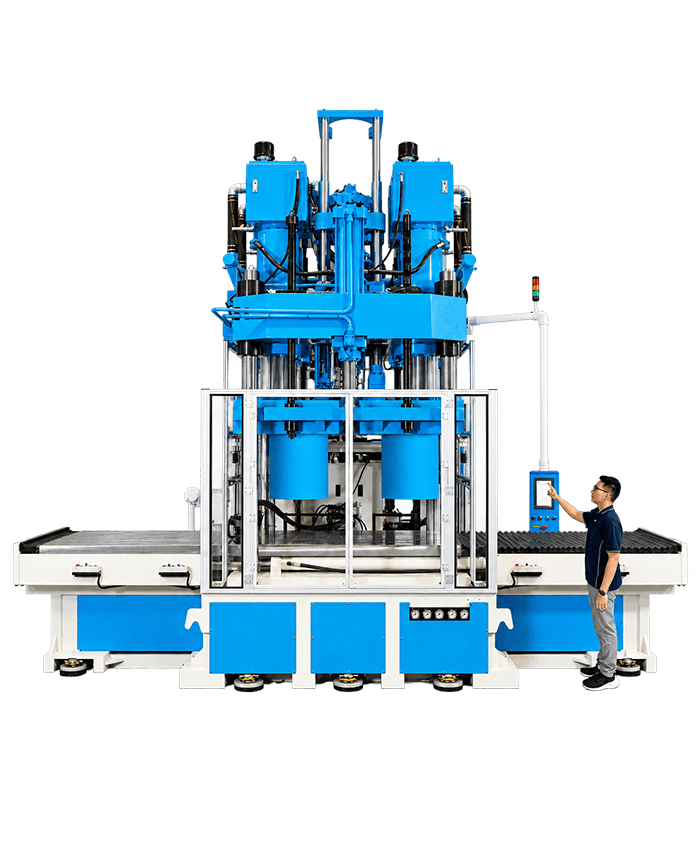
Many conventional large vertical injection molding machines use a clamping layout that places the mold working area relatively high. For applications requiring frequent manual insert loading, part removal, or mold access, this working height can become an important production-line consideration. This machine adopts the two-platen concept from horizontal machines and rearranges the clamping unit and machine base to bring the working platform down — so insert loading, part removal, and mold changes happen closer to a natural operating height.
Why Rethink Working Platform Height
On production floors where operators load inserts, remove parts, or work on the mold by hand, working platform height directly affects ergonomics and ease of operation. When operators have to bend or stand on tiptoe for long periods, efficiency suffers and fatigue builds up over time; some plants even install raised platforms, which introduces additional safety risks.
With a lower working platform, operators can place inserts and remove parts without climbing or using raised platforms; and when the line integrates robots or conveyors, peripheral equipment no longer needs extra elevation to match an overly tall machine — the overall layout stays simpler.
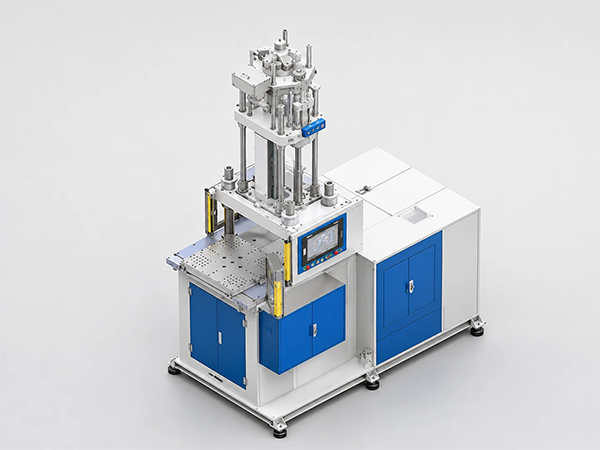
Conventional Structure | High Platform
Three-platen configuration; the working area sits higher
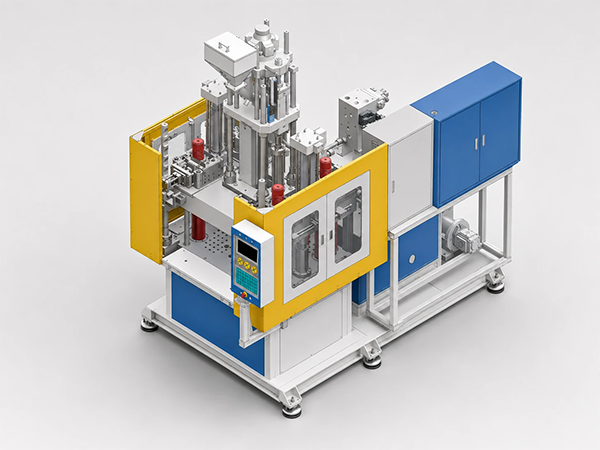
Optimized Structure | Low Working Platform
Redesigned structure; the working platform sits lower
How the Structure Changed
01. Redesigned Structure
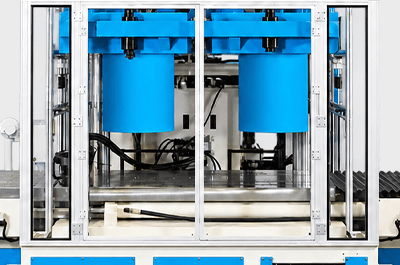
Adopts the two-platen concept from horizontal machines, simplifying the conventional three-platen configuration. Four clamping units provide stable clamping force during injection, with the clamping unit integrated into the machine structure.
02. Low Working Platform
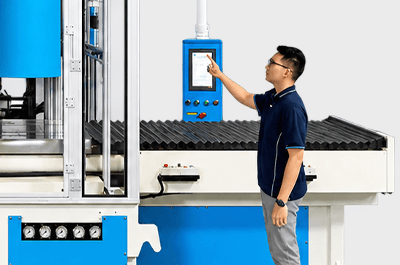
The working platform sits lower, so operators do not need to reach high when loading and unloading, placing inserts, or working on the mold.
03. Ergonomic Operation
Designed around actual operating needs: a lower working height helps reduce operator workload and makes mold installation easier and safer.
04. Adjustable Opening Stroke
The redesigned clamping layout allows the opening stroke to be configured for taller molds without requiring the working platform to be raised accordingly.
Why Not Vertical Clamping with Horizontal Injection?
Another common way to lower the working platform is to pair vertical clamping with horizontal injection. This does bring the platform down, but injection then enters from the side of the mold: the cold runner and sprue path become longer, placing more constraints on mold design and part geometry. A hot-runner system can reduce or eliminate the additional cold-runner length, but it increases mold complexity and cost and introduces additional temperature-control and sealing considerations.
The low platform vertical injection molding machine keeps both vertical clamping and vertical injection — gaining a low working platform without these trade-offs.
Conventional Platform vs. Low Working Platform
Compared at the same clamping tonnage.
| Item | Conventional platform | Low working platform |
|---|---|---|
| Operator access | More reaching may be required | Reduced working height improves access |
| Manual insert loading | Access depends more heavily on machine height | Better suited to frequent manual loading |
| Mold installation | Working height can make mold changes more demanding | Lower working height makes mold changes easier |
| Operator fatigue | Prolonged reaching may increase fatigue over time | Lower working height helps reduce fatigue |
| Mold-change safety | Working at height may require additional precautions | Lower access height supports safer mold changes |
| Automation integration | Peripheral equipment may require additional elevation | Lower transfer height can simplify peripheral layout |
| Factory ceiling height | Taller machines may require more headroom | Overall machine height can be reduced |
| Large molds | Opening distance may be limited by the standard stroke | Opening stroke can be configured for taller molds |
Selection Guide
A Lower Platform Is Not Always Better
If the platform is too low, operators may end up bending over more instead. A suitable design has to weigh the following factors together.
- Mold Height: The height of the mold itself directly affects the actual pick-up position.
- Operator Height & Pick-up Position: Should be evaluated against the actual operators on your line.
- Safety Door Height: Must satisfy safety regulations while preserving operating visibility.
- Maintenance Accessibility: Service space for future maintenance should be considered from the start.
Hardware & Household Items
IMD & IML Item
Auto & Glass Items
Swipe the table to see more informations
*Specifications are subject to change without notice.
*Screw and clamping force are optional.